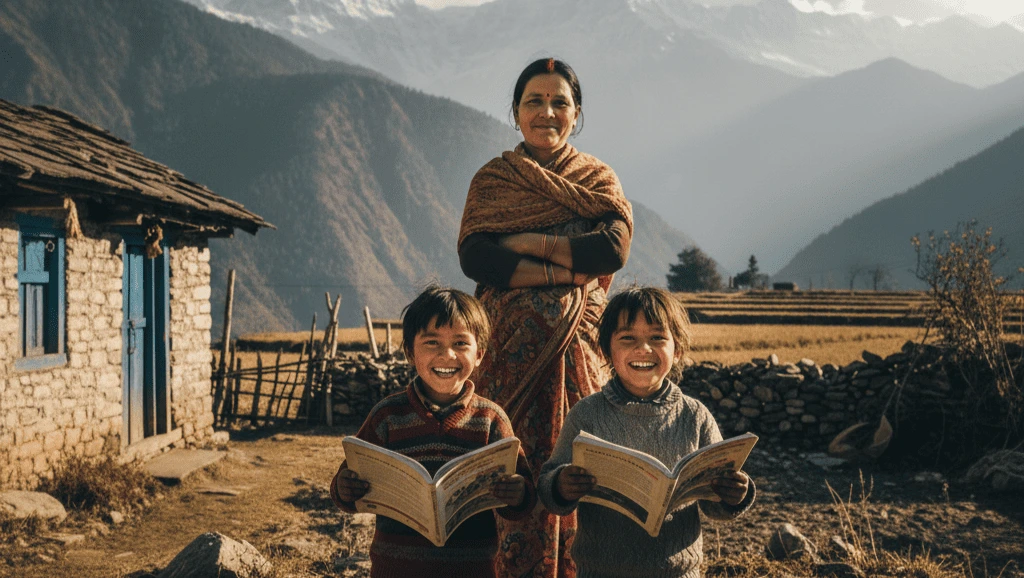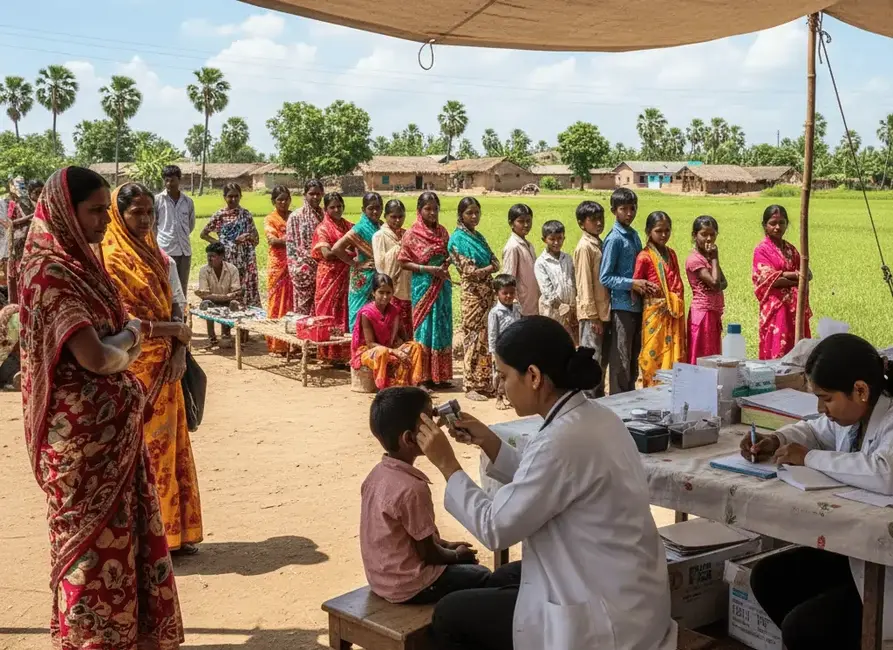
Uttarakhand, India – Education is often called the foundation of progress, but in rural India it remains one of the toughest challenges. While cities have seen rapid improvements in schools, technology, and opportunities, many villages continue to struggle with the most basic facilities. The lack of equal access to education keeps millions of children away from classrooms, limiting not just their future but also the progress of entire communities.
Distance and Accessibility
For many children in villages, the nearest school is not around the corner but often several kilometers away. With poor roads and limited transport, especially in mountain regions, reaching school becomes a daily battle. Families often discourage children, particularly girls, from walking long distances due to safety and cultural concerns. As a result, education becomes a privilege for the few who can afford private transport or relocate closer to schools.
Infrastructure and Resources
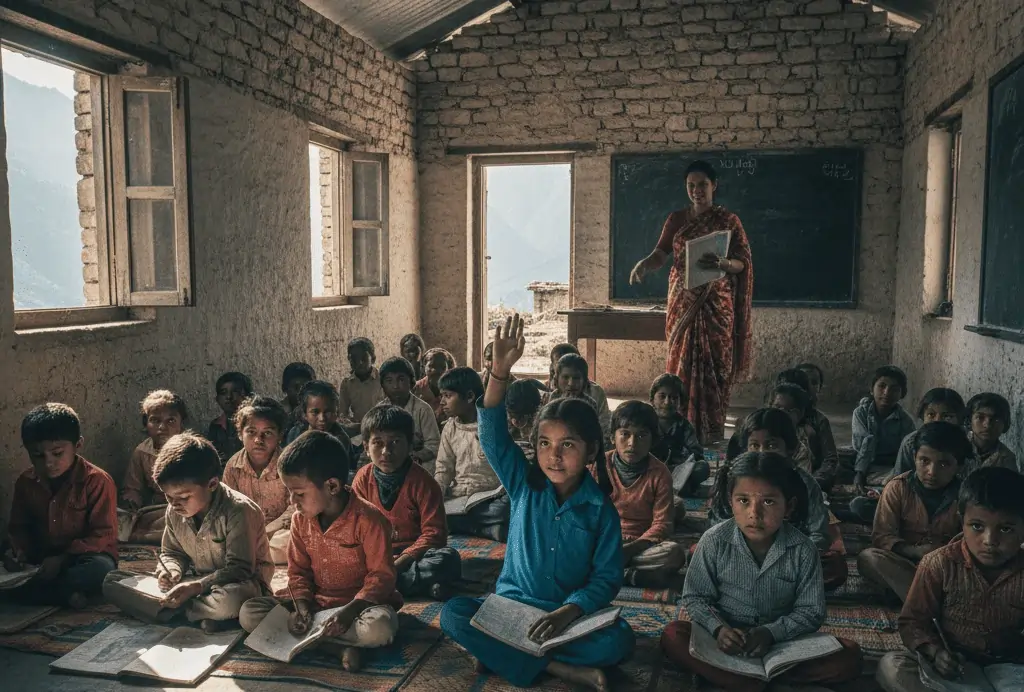
Even when children manage to reach schools, they are often greeted with inadequate facilities. Many rural schools lack basic infrastructure such as proper classrooms, sanitation, and libraries. A shortage of teachers, especially subject specialists, further affects the quality of learning. Without books, digital access, and practical exposure, students are left with limited opportunities to compete with their urban peers. The absence of modern resources widens the rural-urban education gap year after year.
Gender Inequality
The challenge of education in rural India is not just about distance or infrastructure, but also about social norms. Girls often face greater barriers, as families prioritize household responsibilities over schooling. Early marriages and traditional expectations push many young girls out of classrooms. Empowering girls through education remains one of the biggest tasks for organizations working in rural development, as it directly influences the social and economic growth of communities.
Poverty and Dropouts
Poverty remains at the heart of the education crisis. Families struggling to meet basic needs often see education as a luxury. Children are expected to contribute to household income by working in fields, shops, or as laborers. This leads to high dropout rates, particularly after primary school. Without financial support, scholarships, or awareness programs, many children are unable to complete even basic schooling. The cycle of poverty and illiteracy continues from one generation to the next.
The Way Forward
Despite these challenges, there is hope. Government initiatives, non-profit organizations, and community-driven projects are gradually improving access to education in rural areas. Mid-day meal schemes, scholarships, and awareness programs have encouraged more families to send children to school. However, much more needs to be done. Education must be made accessible, affordable, and inclusive for every child.
Ramyanti Foundation envisions contributing to this change by focusing on rural education programs in the future. Our mission is to ensure that children in villages and mountain regions have equal opportunities to learn, grow, and dream. Education is not just about books and exams; it is about giving every child the confidence and skills to shape their own future.
Conclusion
Education in rural India remains the biggest challenge, but it is also the biggest opportunity. By addressing distance, infrastructure, inequality, and poverty, we can unlock the potential of millions of children. The journey may be long, but every step matters.
At Ramyanti Foundation, we believe that no child should be left behind because of where they are born. The dream of an educated and empowered rural India is not far if we work together.