
Dehradun, India : Across rural India today, access to digital services is shaping how people study, seek healthcare, apply for jobs, and connect with government systems. While urban areas continue to move rapidly toward digital adoption, many villages remain on the margins due to weak connectivity, limited device access, and low digital literacy. This growing digital divide is closely connected to broader rural challenges that require sustained community awareness, a focus area reflected in the work of Ramyanti Foundation.
What Is the Digital Divide in Rural India Today?
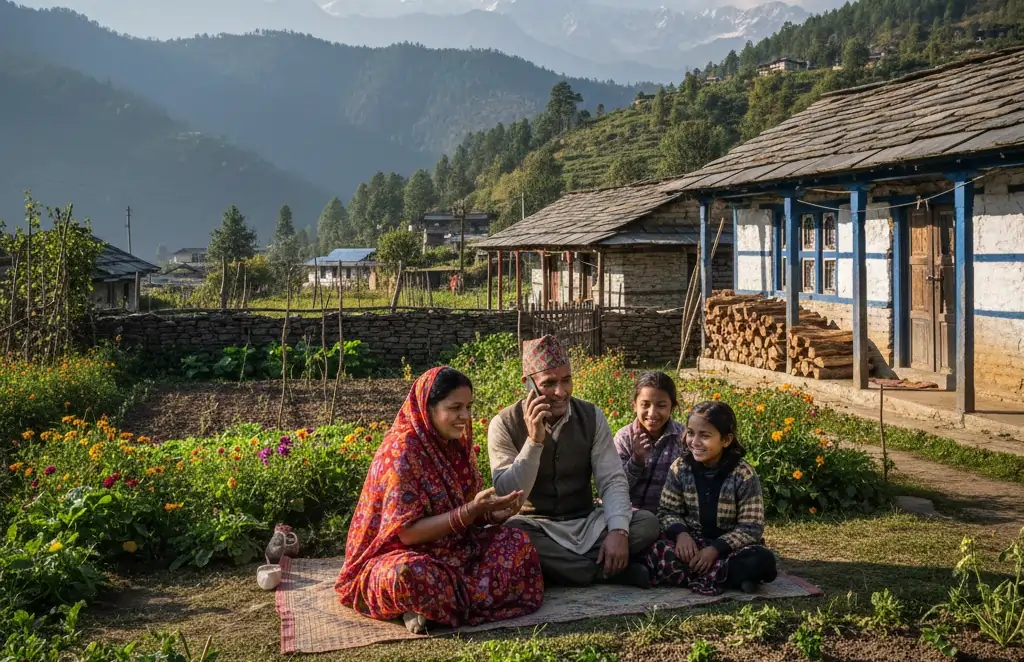
The digital divide today refers to the gap between those who can easily access and use digital technology and those who cannot. In rural India, this gap is visible in everyday life. Internet connectivity is weak or inconsistent, smartphones are often shared within families, and many people lack the skills needed to use digital services confidently.
This gap directly affects access to essential services, including healthcare access in rural India, where online appointments, health information, and digital records remain difficult to use without stable connectivity.
Why Connectivity Remains a Major Issue Today
Connectivity remains one of the biggest barriers today. Many villages still face weak mobile networks, slow internet speeds, and frequent power cuts. In hill and remote areas, terrain makes infrastructure expansion difficult, leaving communities digitally isolated.
When the network drops or electricity fails, online classes stop, digital payments fail, and access to information disappears. In a time when daily services rely on connectivity, these interruptions have real consequences for rural households.
Device Access and Affordability on the Ground
Even today, owning a smartphone is not guaranteed for every rural household. In many families, one phone is shared among multiple members. Children wait for parents to return from work to access online study material. Women often have limited control over device usage, and elderly family members struggle to navigate basic phone functions.
Data recharges, repairs, and replacements also cost money. Digital access may appear affordable from the outside, but for many rural families, it remains a financial burden.
Digital Literacy : The Invisible Barrier Today
Knowing how to use a phone is not the same as being digitally literate. Across rural India today, many people use smartphones for calls or videos but struggle with essential tasks like filling online forms, accessing government portals, or understanding digital security.
Fear of online fraud, confusion around passwords and OTPs, and language barriers further discourage usage. Women and older adults are often the most affected, widening social and generational gaps within communities.
How the Digital Divide Is Linked to Education and Migration Today
Education has become increasingly digital, but access remains unequal. Online classes, learning portals, and digital resources are common today, yet many rural students cannot participate fully due to connectivity and device limitations.
Over time, this digital disadvantage contributes to migration from hill regions, as young people move to cities not only for jobs but also for better internet access and digital exposure.
Healthcare and Digital Services : A Growing Gap
Healthcare services are also becoming more digital today. Telemedicine, online appointments, and digital health records are expanding, but rural communities often cannot benefit from them fully. Poor connectivity and low digital literacy make it hard to access these services when they are needed most.
This digital gap adds to existing healthcare challenges and increases dependence on physical travel, which is already difficult in many rural and hill areas.
Digital Access and Migration Trends Today
Lack of digital access also influences migration patterns. Young people often move to cities not only for jobs but also for better connectivity and digital exposure. This digital disadvantage contributes to migration from hill regions, where limited internet access affects education, work opportunities, and access to services.
In this way, the digital divide quietly shapes decisions that change family structures and village demographics.
Why Digital Awareness Matters for Community Development
Digital access today determines who can apply for jobs, access government schemes, and participate in modern systems. When rural communities are digitally excluded, existing inequalities deepen.
Understanding these gaps is a key part of long-term community development efforts that aim to include everyone in progress, not just those with access and skills.
Conclusion
The digital divide in rural India is not an abstract concept or a future risk. It is a present challenge affecting education, healthcare, livelihoods, and everyday life. While technology continues to advance, access remains uneven.
Bridging this gap begins with acknowledging reality – that digital inclusion requires connectivity, devices, skills, and awareness working together. Only then can digital progress truly reach every village and household.