
Uttarakhand, India – In the quiet villages and mountain valleys of rural India, healthcare remains a struggle of distance, awareness, and accessibility. While urban centers benefit from advanced hospitals and trained doctors, millions of families in rural areas continue to rely on limited or outdated medical infrastructure. The result is a health divide that affects not just individuals, but generations.
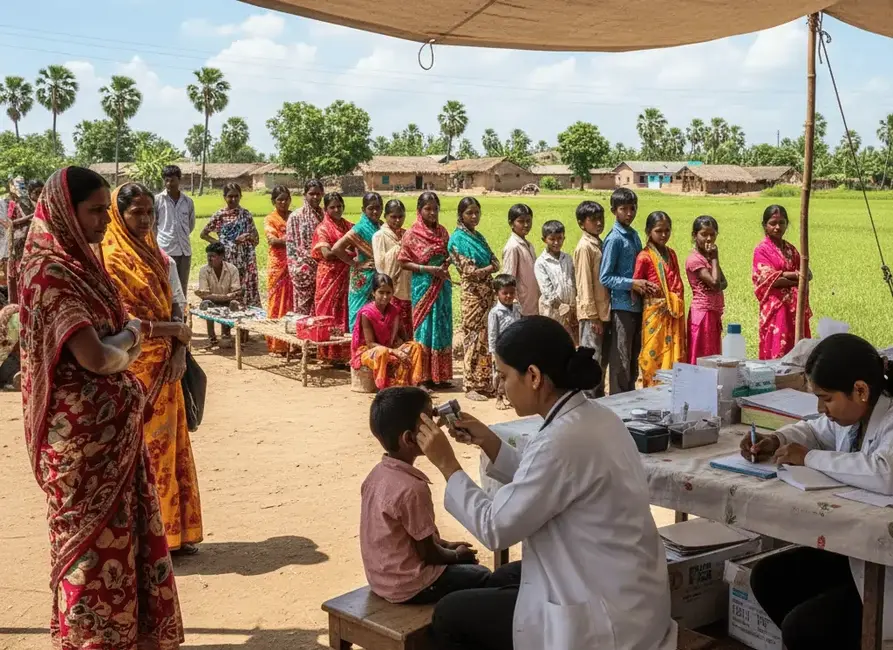
The Long Road to Healthcare
For many families living in remote areas, a doctor is not just a few minutes away – sometimes, it’s a day’s journey. The nearest health center may be located miles away, and without proper roads or transport, reaching it becomes nearly impossible in emergencies. Pregnant women, elderly patients, and children are often the most vulnerable. Many illnesses that could be easily treated in cities turn fatal simply because help comes too late.
Lack of Infrastructure and Medical Staff
India’s rural regions face a chronic shortage of healthcare facilities and qualified staff. Primary Health Centers (PHCs), the backbone of rural health services, often operate with minimal equipment and understaffed teams. Many villages depend on one or two health workers covering large areas, often without regular supplies or support. Without labs, medicines, or advanced diagnostics, prevention and treatment become difficult. This shortage doesn’t just limit medical care – it undermines trust in the system itself.
The Awareness Gap
One of the less visible but equally important challenges is lack of health awareness. Many rural communities are unaware of preventive measures, vaccination schedules, or hygiene practices. Misconceptions about modern medicine and hesitation to seek early treatment make conditions worse. Health education remains limited, often reaching only when a crisis occurs. Bridging this awareness gap is as crucial as building hospitals – because health begins with informed choices.
Women and Children : The Most Affected
When healthcare is limited, women and children pay the highest price. Maternal and child health indicators in rural India still lag behind national averages. Many women continue to give birth without medical assistance. Lack of prenatal care, poor nutrition, and unawareness of hygiene create dangerous situations for mothers and infants alike. Malnutrition and preventable diseases among children remain widespread. Ensuring accessible and safe healthcare for women and children is the foundation for healthier communities.
Community – Based Solutions and Hope
Despite these challenges, there are stories of resilience and progress. Across rural India, small initiatives are creating big impacts – mobile health clinics, community health volunteers, and awareness programs are reaching villages that were once untouched by formal healthcare. Local participation is the key. When communities take ownership – by training local health workers, organizing health camps, and spreading awareness – the results are lasting and meaningful.
Ramyanti Foundation aspires to be part of this positive change. In the coming years, our goal is to build community health awareness programs, train local health volunteers, and organize mobile outreach camps in remote villages. We believe healthcare should not depend on location or income. Every person deserves timely care, basic medicine, and the dignity of good health.
The Way Forward
India’s progress will be incomplete until every village has access to quality healthcare. Bridging the health divide requires cooperation between government, non-profits, and the communities themselves. Awareness, infrastructure, and empathy must go hand in hand. At Ramyanti Foundation, we are committed to contributing toward a healthier, more inclusive rural India – where healthcare is not a luxury but a right.
Conclusion
Healthcare is not just about curing illness; it is about building healthier lives. The journey toward better rural healthcare is long, but it is one we must take together. From awareness to accessibility, every step counts.
Together, we can ensure that no life is lost because help was too far away.